
A bathroom can look polished and still feel frustrating every morning. One damp towel lands on the floor, another hangs over the shower door, and the hand towel never seems to stay where anyone can reach it. Well-chosen towel hooks solve that everyday mess with very little wall space.
The appeal goes beyond neatness. Hooks can make a compact bathroom easier to use, give each family member a dedicated spot, and reduce the visual bulk of a long bar. The right towel hook also supports the way you actually move through the room instead of forcing you to work around the hardware.
This guide is written for U.S. homeowners, renters, and remodelers who want practical storage without turning a simple purchase into a design headache. You’ll learn how to compare styles, plan placement, select materials, install securely, and decide when professional help is worth paying for.
How Towel Hooks Improve Everyday Bathroom Function
A towel bar asks for a wide, uninterrupted stretch of wall. A hook needs only a small mounting area, which makes it useful beside a narrow vanity, behind a door, near a shower opening, or between two windows. That flexibility is the main reason bathroom towel hooks work so well in powder rooms, apartments, guest baths, and busy family spaces.
Hooks also encourage separate storage. Instead of layering two bath towels on one bar, you can assign one position to each person. In a shared bathroom, this simple arrangement helps prevent mix-ups and keeps wet fabric from being piled together.
Hooks Versus Bars and Rings
A bar spreads a towel out more fully, so it may dry faster when the room has good airflow and enough wall width. A ring is usually best for hand towels near a sink. Hooks sit between those options: they’re compact, easy to grab, and suitable for bath sheets, robes, washcloths, or clothing.
The best choice depends on behavior rather than fashion. Someone who carefully folds a towel may prefer a bar, while children and hurried adults are more likely to use bathroom hooks for towels consistently because hanging takes one motion.
Why Compact Bathrooms Benefit Most
In a small room, every projection matters. A bulky rack near a doorway can catch a sleeve or make the wall feel crowded. Low-profile towel hooks for bathroom wall areas preserve walking space while still giving towels a permanent home.
They can also use overlooked vertical surfaces. A slim section beside a medicine cabinet may be too narrow for shelving, yet wide enough for one or two hooks arranged vertically. That turns dead space into useful storage without adding cabinetry.
Choosing the Right Hook Style for Your Bathroom
The best hardware starts with the room, not the product photo. Before shopping, note who uses the bathroom, what size towels they own, where wet hands or bodies will be when reaching for them, and whether the wall is drywall, tile, wood, or masonry.
Well-chosen bathroom hardware should feel almost invisible in use. You shouldn’t have to cross a wet floor, squeeze behind a door, or reach over a toilet to grab a towel.
Single, Double, and Multi-Hook Designs
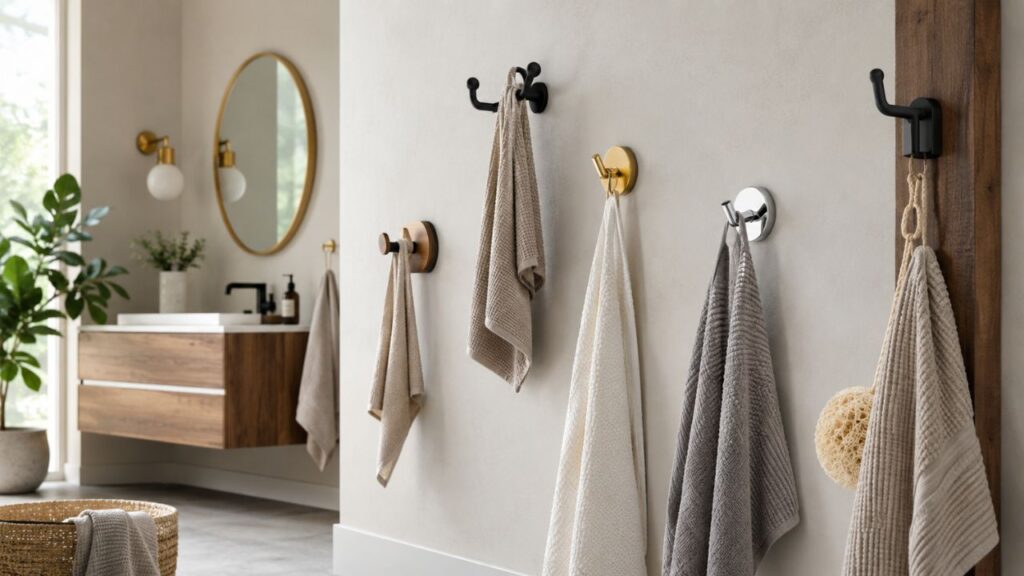
A single hook gives one towel a clear place and usually has the cleanest appearance. A double model adds capacity without requiring another mounting plate, though two thick towels can overlap. A rail with several pegs is useful for children’s bathrooms, pool-house entries, or large households.
For heavy bath sheets, check the hook’s depth and tip shape. A short, flat peg may look sleek but allow thick fabric to slide off. A deeper upward curve usually holds bulky towels more reliably.
Open Hook or Closed Loop
Open hooks are fast and intuitive. Closed loops, rings, and narrow U-shaped designs hold fabric more securely, but they take slightly more effort to load. A curved towel hook often offers the best balance for everyday use because it catches the towel without requiring careful folding.
In homes with young children, avoid sharp corners at face or shoulder level. Rounded edges and smooth mounting plates are easier to live with, especially in narrow bathrooms where people brush close to the wall.
Fixed, Adhesive, Suction, and Over-Door Options
Screw-mounted hardware provides the most permanent result when properly installed. Adhesive models suit renters or smooth surfaces, but performance depends on surface preparation, moisture exposure, product quality, and the weight of a wet towel. Suction styles can work temporarily on glass or glossy tile, though they may loosen over time.
Over-door models require no drilling, but check the door clearance and frame before buying. A thick bracket can prevent the door from closing cleanly, while a hanging towel may hit the wall or block a mirror.
Placement, Height, and Spacing That Feel Natural
Good placement is less about following one universal measurement and more about matching reach, towel size, and nearby fixtures. Start by standing where you’ll use the towel. Extend your hand naturally, then mark the wall where the motion feels comfortable.
For many adults, a mounting height around 60 to 70 inches from the finished floor works for bath towels, but shorter users and children need lower positions. When planning bathroom towel hooks, test the actual towel length so the bottom stays clear of the floor, toilet lid, vanity top, and baseboard heater.
Near the Shower or Tub
The safest position is reachable before you step onto the floor. Mounting just outside the splash zone usually keeps hardware accessible without exposing it to constant direct water. Avoid a location where the hanging towel blocks a switch, vent, shower control, or door swing.
For a walk-in shower, a dry-side wall near the opening often works better than a hook inside the enclosure. Placing towel hooks for bathroom wall surfaces outside the wet area also reduces water dripping down the mounting plate.
Beside the Vanity
Hand towels should sit close enough to the sink that water doesn’t trail across the countertop or floor. A hook can fit between the vanity and doorway where a ring would project too far. In a double-vanity bathroom, one hook per sink creates a clear, symmetrical setup.
When using bathroom hooks for towels beside a mirror, leave enough space that the towel doesn’t cover the frame or touch electrical outlets. It should hang freely rather than bunching against the backsplash.
Behind a Door
The back of a door is valuable, but it isn’t automatically the best location. Confirm that the door opens fully without crushing the towel against another wall or fixture. Also check whether the hook will strike a wall-mounted object when the door swings.
A door-mounted solution works best for robes, spare towels, or occasional use. Daily bath towels generally dry better where air can circulate around them.
Spacing Several Hooks
For full-size towels, allow enough horizontal space to limit overlap. Depending on towel thickness and hook depth, roughly 8 to 12 inches between centers is a practical starting range. Hang sample towels before drilling every hole.
Staggered rows can increase capacity, but avoid placing one wet towel directly over another. When planning hook placement, give each piece of fabric enough breathing room to release moisture.
Installing Towel Hooks Securely on Different Surfaces
Installation quality matters more than the apparent weight of the hardware. A wet towel is heavier than a dry one, and daily pulling gradually works loose screws that were placed into weak material.
Installation guidance from major home-improvement retailers recommends locating a stud where possible before mounting a hook. When a stud isn’t available, the anchor must match the wall material and expected load. Ordinary drywall anchors shouldn’t be treated as suitable fasteners for tile, stone, or every other bathroom surface.
Drywall
A stud-backed screw gives a strong attachment. Use a stud finder, confirm the location, and follow the manufacturer’s instructions for pilot-hole size. If the chosen point falls between studs, use an appropriate hollow-wall anchor rather than driving a basic screw into gypsum board.
For bathroom hooks for towels, avoid relying on the smallest plastic expansion anchor simply because it came in the package. Hardware quality varies, and a towel is pulled sideways and downward many times a day. A properly sized self-drilling anchor or toggle system may provide a more dependable hold when the wall cavity allows it.
Ceramic or Porcelain Tile
Tile requires patience. Mark the point carefully, keep the drill from wandering, use a bit intended for the tile material, and avoid hammer mode until the surface has been penetrated if the bit manufacturer advises against it. The fastener still needs to engage suitable backing or an approved anchor behind the tile.
Before drilling, verify that no plumbing or electrical line is likely behind the location. A remodeler or experienced handyman is a sensible choice when you don’t know the wall construction.
Wood and Cabinetry
Solid wood is usually straightforward, but thin cabinet panels are different from wall studs. Choose a screw short enough that it won’t break through the opposite side. Pre-drilling helps prevent splitting and allows the mounting plate to sit flat.
A towel hook on the side of a vanity can be convenient for a hand towel, provided the towel won’t brush the floor or interfere with drawers. Seal any exposed wood around the hole if moisture could reach it.
Glass, Stone, and Specialty Surfaces
Don’t casually drill tempered glass; it can shatter. Use a clamp-on, suction, or adhesive accessory designed for glass, or work with a glass professional if permanent hardware is required.
Natural stone also varies in hardness and fracture risk. For expensive slab walls, professional drilling is often cheaper than repairing a cracked panel.
A Basic Installation Sequence
- Hold the hook in position and test it with the towel you plan to use.
- Check for studs, pipes, wiring, door movement, and nearby fixtures.
- Use the supplied template or mounting plate to mark holes.
- Confirm level and spacing before drilling.
- Select the correct bit, screw, and anchor for the surface.
- Tighten the mounting plate securely without crushing drywall or cracking tile.
- Attach the decorative cover and test for movement.
Manufacturer instructions should take priority because mounting systems differ. Some products use templates, mounting posts, anchors, decorative covers, and set screws in a particular sequence. Skipping one of those steps can leave the accessory crooked or loose even when the wall anchor itself is secure.
Materials and Finishes That Hold Up in Humid Rooms
Bathroom hardware faces steam, splashes, cleaning products, wet fabric, and frequent handling. The finish should coordinate with the room, but the underlying material and coating quality determine how well it ages.
When comparing towel hooks for bathroom wall use, inspect product specifications rather than relying only on color names. “Brushed nickel,” “stainless look,” and “matte black” describe appearance, not necessarily the base metal or corrosion resistance.
Stainless Steel
Quality stainless steel is a practical choice for humid rooms because it resists corrosion and has a solid, contemporary feel. Grades and finishes vary, so coastal homes or poorly ventilated bathrooms may benefit from products specifically rated for damp or corrosive environments.
Fingerprints show less on brushed surfaces than highly polished ones. Regular wiping with a soft cloth usually keeps the finish presentable without aggressive cleaners.
Brass
Solid brass is dense, durable, and common in higher-end hardware. It may be polished, brushed, plated, or intentionally aged. Unlacquered brass develops a patina, which some homeowners love and others mistake for damage.
If you prefer a consistent bright finish, look for a protected or plated surface and follow the care directions. Abrasive pads can scratch protective coatings and create uneven wear.
Zinc Alloy and Aluminum
Zinc alloy allows detailed shapes at accessible prices, making it common in decorative collections. Quality varies considerably. Aluminum is lightweight and naturally corrosion resistant, though thin castings can feel less substantial.
For bathroom towel hooks that will receive heavy daily use, read the warranty, examine the mounting plate, and check whether replacement parts are available. A strong base hidden behind the finish is often more important than the decorative body.
Matching Finishes Without Making the Room Flat
You don’t need every metal to match exactly. A bathroom can combine black lighting, brushed-nickel faucets, and warm brass accents when the mix looks intentional. Repeating each finish at least once usually creates more balance than introducing a single isolated color.
For a calm appearance, match the hook to the faucet or cabinet pulls. For contrast, use the hooks as a small accent that connects to a mirror frame or light fixture.
Choosing the Right Hook for Your Household
A beautiful accessory can still fail when it doesn’t suit the users. Think about grip, reach, towel size, cleaning habits, and how many people share the room.
Families With Children
Children use storage that is obvious and reachable. Install their positions lower than adult hardware, consider color labels or initials, and leave enough distance between damp towels. A row of rounded bathroom hooks for towels can be easier for children than a bar that requires folding.
Plan for growth, too. A vertical rail or wood backboard lets you relocate hardware later with fewer repairs to the wall.
Guests and Powder Rooms
Guests need visual clarity. A hand towel beside the sink should be unmistakable, while a robe hook behind the door can hold clothing or a toiletry bag. Avoid overcrowding a powder room with full-size bath storage that no one will use.
A single towel hook paired with a neatly folded spare towel can feel more considered than several empty pegs. The goal is easy use, not maximum capacity.
Older Adults and Accessible Bathrooms
Reach and stability deserve separate attention. Hooks should be accessible from the intended standing or seated position and should never be mistaken for grab bars. Decorative hooks aren’t designed to support body weight.
For public or legally regulated spaces, accessibility requirements depend on the facility and applicable code. The U.S. Department of Justice’s ADA standards address reach ranges, clear floor space, and accessory placement. These requirements should be reviewed with the project’s designer or code professional rather than reduced to one universal residential mounting height.[4]
Renters and Temporary Spaces
Renters should review lease terms before drilling. High-quality adhesive systems can work on smooth, clean surfaces, but painted drywall may release paint when removed. Test removability in a hidden area when possible.
Over-door racks and freestanding ladders avoid wall holes entirely. For temporary towel hooks for bathroom wall placement, choose a location away from direct spray and follow the adhesive maker’s curing time before adding weight.
Common Mistakes When Buying Towel Hooks
The most common error is buying for appearance before measuring. A hook may look compact online but project far enough to interfere with a door or place a towel against the toilet. Record height, width, depth, mounting-plate size, and available clearance.
Another mistake is putting too many bathroom towel hooks in one small zone. More capacity doesn’t help when every towel overlaps. Fewer, better-spaced positions often keep the room tidier.
Mounting Too Close to Water
“Bathroom rated” doesn’t mean the accessory should sit under constant spray. Water can collect behind mounting covers, affect adhesive, and leave mineral deposits on the finish. Keep hardware in a convenient but reasonably dry location.
Ignoring the Towel’s Real Size
Bath sheets are much longer and heavier than standard towels. Test the exact fabric before final installation. This one-minute check prevents a towel from dragging on the floor or covering an outlet.
Choosing a Shallow Shape
Minimal pegs can work for lightweight hand towels but struggle with thick Turkish cotton, plush terry, or robes. Look at the usable depth, not just the overall dimensions. A gently raised tip helps hold fabric during quick daily use.
Using the Wrong Fastener
A premium hook attached with an unsuitable anchor is still a weak installation. Match the fastener to drywall, stud, tile, masonry, or wood, and never assume one anchor works for every surface. Reliable installation instructions consistently recommend measuring carefully, using surface-appropriate anchors, and avoiding overtightening.[5]
Forgetting Cleaning Access
Ornate shapes and tightly spaced double hooks can trap dust, lint, and product residue. Choose a form you can wipe around easily. In a high-use household, clean lines often stay attractive longer than highly detailed hardware.
Frequently Asked Questions
Where can I buy bathroom hooks near me today?
Most home-improvement stores, plumbing showrooms, hardware stores, and large home-goods retailers carry them. Search local inventory before driving, then confirm that the finish and mounting hardware are actually in stock because display models and online listings don’t always reflect shelf availability.
How much should local bathroom hook installation cost?
Pricing varies by city, wall material, travel time, and minimum service charges. A handyman may price a small visit as a flat minimum rather than charging per hook, while tile, stone, or uncertain wall conditions can increase labor because drilling takes more care.
Can a handyman install bathroom hooks for towels on tile?
Many experienced handymen can, but ask specifically about tile drilling and hidden plumbing checks. For costly porcelain slabs, natural stone, or glass, use a contractor who has handled that exact surface and carries appropriate insurance.
How long does bathroom hook installation usually take?
A straightforward drywall installation may take only part of a service visit once the placement is decided. Multiple hooks, hard tile, damaged drywall, missing blocking, or old hardware removal can extend the job, so send photos to the installer for a more realistic estimate.
How do I find a reliable installer near me?
Look for recent local reviews that mention bathroom accessories, tile work, and clean finishing rather than relying only on an overall star rating. Ask whether the installer supplies anchors, checks for studs and utilities, protects nearby surfaces, and guarantees that loose hardware will be corrected.
Do local stores cut prices on matching bathroom hardware sets?
They often run collection discounts, seasonal promotions, or contractor pricing, but a set is only a good value when every piece fits your room. Compare the cost of the exact items you need with the bundle price and check the return policy for opened hardware.
Can I get same-day towel hook installation?
Same-day service is possible in many metro areas when a handyman has an open route and the wall is standard drywall. It becomes less likely when you need a specific finish, tile anchors, repair work, or approval from a landlord or property manager.
What should I ask before hiring someone to mount towel hooks for bathroom wall areas?
Ask what fastener they’ll use, whether they expect to hit a stud, and how they’ll check for pipes or wiring. Also confirm the final height and spacing in writing or with painter’s-tape marks before any drilling begins.
Are adhesive bathroom towel hooks a good choice for rentals?
They can be practical on clean, smooth tile or glass when the product is rated for humid areas and wet-towel weight. They’re less predictable on textured walls, dusty paint, or surfaces exposed to steam, and removal can damage weak paint layers.
Can a local plumber install a towel hook?
Some plumbers will install accessories during a larger bathroom project, but many won’t schedule a visit for decorative hardware alone. A handyman, remodeling contractor, or bath-accessory installer is usually the more cost-effective match unless plumbing changes are also involved.
Final Thoughts
Good bathroom hardware doesn’t call attention to the effort behind it. It simply puts the towel where your hand expects it, keeps fabric off the floor, and fits the room without blocking doors or crowding fixtures. Thoughtful placement and reliable fastening matter just as much as finish or style.
Choose towel hooks by testing real reach, real towel size, and real wall conditions before you drill. When each user has a comfortable, well-spaced spot, even a small bathroom starts to feel calmer, cleaner, and noticeably easier to live with.