
Furniture tells a story. A dining chair passed down through generations, a favorite reading chair that has seen years of use, or a sofa that remains structurally perfect despite worn fabric all have one thing in common—they often deserve restoration rather than replacement.
Learning how to reupholster furniture is one of the most practical home improvement skills you can develop. Quality furniture frames can last decades, while fabric and padding naturally wear out over time. Through professional reupholstery, homeowners can preserve valuable pieces, customize interior design, and save money compared to purchasing new furniture.
Whether you’re researching how to reupholster a chair, planning to reupholster a chair yourself, exploring how to reupholster dining room chairs, or considering complete reupholstering furniture projects, this guide covers everything you need to know.
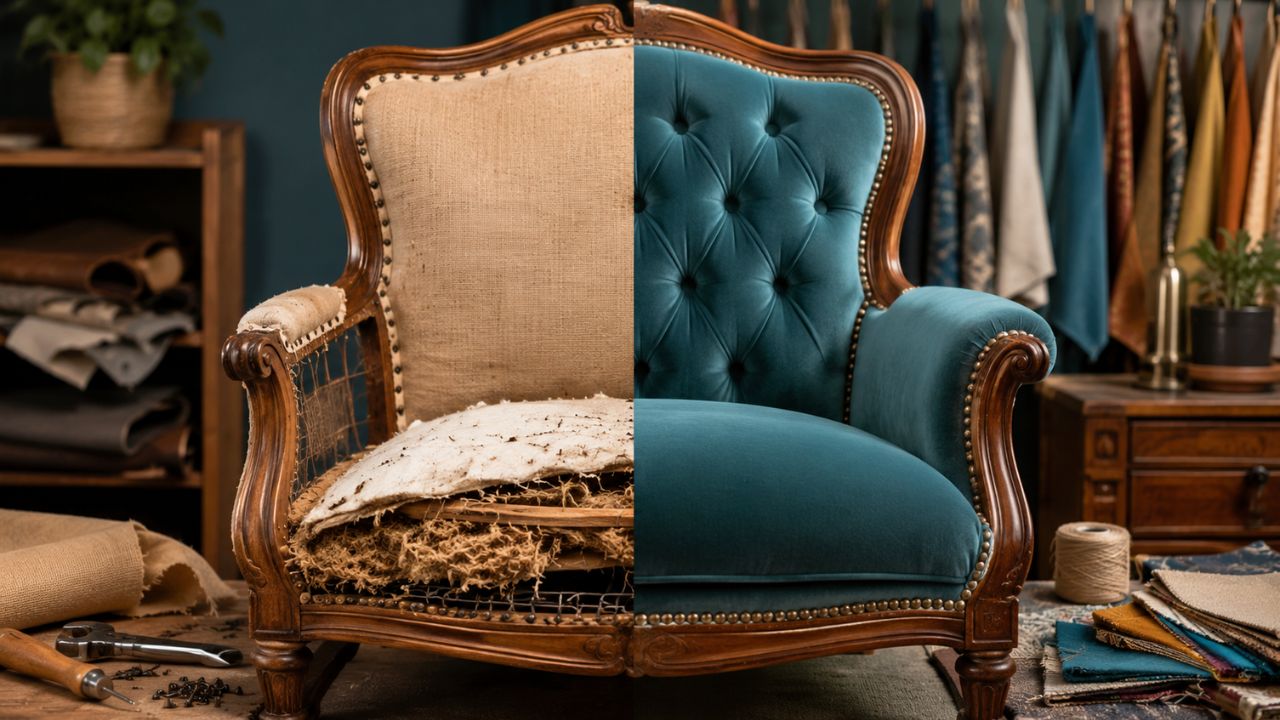
What Does It Mean to Reupholster Furniture?
To reupholster furniture means replacing fabric, padding, springs, webbing, and other soft materials while retaining the original frame structure.
Unlike simple slipcovers or fabric repairs, true reupholstery involves removing existing upholstery materials and rebuilding the furniture’s comfort layers before applying new fabric.
Common pieces that homeowners reupholster include:
- Dining chairs
- Accent chairs
- Armchairs
- Sofas
- Ottomans
- Headboards
- Benches
- Antique furniture
Professional reupholstery has become increasingly popular as consumers seek sustainable alternatives to furniture replacement.
Why Reupholstery Is Making a Comeback
Several factors have increased interest in reupholstery services and DIY furniture restoration.
Sustainability
Millions of furniture items end up in landfills every year. Choosing to reupholster extends the life of existing furniture and reduces waste.
Cost Savings
High-quality hardwood furniture often costs significantly more to replace than to restore through reupholstery.
Customization
When you reupholster furniture, you gain complete control over:
- Fabric selection
- Color schemes
- Patterns
- Texture
- Cushion firmness
- Decorative details
Preserving Sentimental Value
Many families choose reupholstery to preserve heirloom pieces that hold emotional significance.
Is It Worth Reupholstering Furniture?
The answer depends on several factors.
| Factor | Reupholster | Replace |
|---|---|---|
| Solid wood frame | ✓ | |
| Antique piece | ✓ | |
| Sentimental value | ✓ | |
| Broken frame | ✓ | |
| Low-quality particleboard | ✓ | |
| Rare design | ✓ | |
| Mass-produced cheap furniture | ✓ |
As a rule, furniture built with hardwood frames often benefits greatly from reupholstering furniture rather than replacement.
Tools Needed for Reupholstery Projects
Before beginning any reupholstery project, gather essential tools.
Basic Upholstery Tools
- Staple gun
- Upholstery staples
- Needle-nose pliers
- Fabric scissors
- Staple remover
- Rubber mallet
- Measuring tape
- Sewing machine
- Chalk marker
- Tack hammer
Advanced Tools
- Webbing stretcher
- Upholstery needles
- Curved needles
- Foam cutter
- Fabric steamer
Quality tools make every reupholstery project easier and more professional.
How to Reupholster a Chair: Step-by-Step Guide
One of the most searched furniture restoration topics is how to reupholster a chair.
The process is beginner-friendly when broken into manageable steps.
Step 1: Inspect the Chair
Before learning how to reupholster a chair, examine:
- Frame stability
- Loose joints
- Damaged wood
- Cushion condition
- Existing fabric
Repair structural issues before continuing.
Step 2: Remove Existing Fabric
Carefully remove:
- Staples
- Nails
- Tacks
- Trim
Take photos throughout the process. These images become valuable references during reassembly.
Step 3: Label Fabric Pieces
Anyone learning how to reupholster a chair should save old fabric panels as templates.
Mark:
- Front
- Back
- Left side
- Right side
This prevents confusion later.
Step 4: Replace Padding
Inspect:
- Foam
- Batting
- Cotton stuffing
Replace worn materials for improved comfort.
Step 5: Cut New Fabric
Use old pieces as patterns.
Allow extra fabric around edges for stapling and adjustments.
Step 6: Attach Fabric
Begin from the center and work outward.
Pull evenly to prevent wrinkles.
Step 7: Finish Details
Install:
- Trim
- Welting
- Decorative nails
- Dust covers
Following these steps ensures success when learning how to reupholster a chair.
How to Reupholster a Dining Chair
Dining chairs are among the easiest furniture pieces to restore.
Many homeowners researching how to reupholster a dining chair discover the project can often be completed within a few hours.
Materials Required
- Upholstery fabric
- Staple gun
- Screwdriver
- Batting
- Foam (if needed)
Process
- Remove seat cushion.
- Detach old fabric.
- Replace foam if worn.
- Cut new fabric.
- Stretch evenly.
- Staple underneath.
- Reattach seat.
Understanding how to reupholster a dining chair can save hundreds of dollars on furniture replacement.
How to Reupholster Dining Room Chairs
Many families own sets of matching dining chairs, making how to reupholster dining room chairs a valuable skill.
The process follows similar principles but requires consistency across all chairs.
Important Considerations
Fabric Matching
When learning how to reupholster dining room chairs, ensure pattern alignment remains consistent.
Foam Thickness
Use identical foam thickness on every chair.
Staple Placement
Consistent workmanship creates a professional appearance.
Batch Production
Experienced DIYers working on how to reupholster dining room chairs often complete all cutting before beginning assembly.
Reupholster Dining Chairs: DIY vs Professional Services
Homeowners frequently wonder whether to reupholster dining chairs themselves or hire professionals.
| DIY | Professional |
|---|---|
| Lower cost | Higher quality |
| Learning experience | Time savings |
| Creative freedom | Expert craftsmanship |
| Requires tools | No equipment needed |
| Potential mistakes | Consistent results |
Simple seat cushions are excellent beginner projects when planning to reupholster dining chairs.
Reupholstering Dining Room Chairs: Common Mistakes
Many first-time DIY enthusiasts make avoidable errors while reupholstering dining room chairs.
Pulling Fabric Too Tight
Overstretching can distort patterns and weaken fabric fibers.
Ignoring Grain Direction
Fabric direction matters, especially with patterned textiles.
Using Weak Staples
Furniture-grade staples improve durability.
Choosing Unsuitable Fabric
Dining furniture experiences heavy use.
When reupholstering dining room chairs, select fabrics rated for high abrasion resistance.
Best Fabrics for Reupholstery Projects
Fabric choice can determine the success of any reupholstery project.
Performance Fabric
Ideal for:
- Families
- Dining rooms
- High-traffic areas
Benefits:
- Stain resistance
- Easy cleaning
- Durability
Linen
Provides a relaxed, natural appearance.
Cotton Blends
Popular in residential reupholstery because of affordability and comfort.
Velvet
Adds luxury and texture.
Leather
Premium option for furniture restoration.
Many professionals recommend leather when reupholstering furniture intended for long-term use.
Reupholstering Furniture: Beyond Chairs
While many beginners start with dining chairs, reupholstering furniture includes a wide range of projects.
Sofas
Require:
- Large fabric quantities
- Spring inspection
- Cushion rebuilding
Armchairs
Ideal intermediate projects.
Ottomans
Great beginner-friendly options.
Headboards
Simple construction makes them suitable for DIY reupholstery.
The principles remain similar across most reupholstering furniture projects.
Cost of Reupholstery
Prices vary significantly.
| Furniture Type | Average Cost |
|---|---|
| Dining Chair | $50–$300 |
| Armchair | $400–$1,200 |
| Recliner | $600–$1,500 |
| Sofa | $800–$4,000 |
| Antique Piece | $1,000+ |
Material selection heavily influences final reupholstery costs.
How Long Does Reupholstery Last?
Properly completed reupholstery can last:
- Dining chairs: 5–15 years
- Armchairs: 10–20 years
- Sofas: 10–25 years
Factors affecting lifespan:
- Fabric quality
- Usage frequency
- Maintenance
- Environmental conditions
Professional Reupholstery vs Furniture Replacement
A common debate is restoration versus replacement.
Benefits of Reupholstery
- Custom fabric choices
- Environmental benefits
- Preservation of craftsmanship
- Potential cost savings
- Sentimental value retention
Benefits of Replacement
- Faster process
- Modern features
- Manufacturer warranty
For solid wood furniture, reupholstering furniture is often the smarter long-term investment.
Expert Tips From Upholstery Professionals
Save Original Materials
Old fabric acts as an excellent pattern guide.
Buy Extra Fabric
Professionals recommend purchasing 10–20% extra material.
Photograph Every Stage
This simplifies reconstruction.
Label Components
Organization prevents mistakes.
Start Small
Before tackling sofas, practice with projects involving how to reupholster a dining chair.
Featured Snippet: How to Reupholster a Chair in 7 Steps
- Remove old fabric and staples.
- Inspect and repair the frame.
- Replace foam and batting.
- Use old fabric as a template.
- Cut new upholstery fabric.
- Stretch and staple fabric evenly.
- Add trim and reassemble the chair.
This is the quickest answer for anyone searching how to reupholster a chair successfully.
Advanced Reupholstery Techniques
Experienced upholsterers often use:
Double-Welting
Creates a refined appearance.
Tufting
Adds depth and luxury.
Spring Retie Systems
Improves comfort and support.
Pattern Matching
Essential for striped and floral fabrics.
Advanced methods can dramatically improve reupholstery outcomes.
Real-World Example: Dining Room Chair Makeover
A homeowner purchased six hardwood dining chairs at a thrift store.
Original condition:
- Faded fabric
- Worn foam
- Solid frames
The owner researched how to reupholster dining room chairs, replaced the foam, installed stain-resistant fabric, and completed the project over a weekend.
Results:
- Saved thousands compared to buying new chairs.
- Improved dining room aesthetics.
- Learned a valuable restoration skill.
This illustrates why many people choose to reupholster dining chairs instead of replacing them.
Future Trends in Reupholstery
The furniture restoration market continues growing due to:
- Sustainable living trends
- Rising furniture prices
- DIY home improvement culture
- Interest in vintage furniture
- Increased customization demand
As environmental awareness grows, reupholstering furniture is likely to become even more popular.
Frequently Asked Questions
Is it cheaper to reupholster furniture than buy new?
For high-quality furniture, yes. Solid wood pieces are often worth restoring through reupholstery.
How difficult is it to reupholster a chair?
Basic dining chairs are beginner-friendly. Complex armchairs require more skill.
Can beginners learn how to reupholster a chair?
Absolutely. Many first-time DIYers successfully learn how to reupholster a chair using online tutorials and practice projects.
How much fabric do I need to reupholster dining chairs?
Most dining chairs require between ½ and 1 yard of fabric each.
What is the best fabric for reupholstering dining room chairs?
Performance fabrics, microfiber, and durable cotton blends work well when reupholstering dining room chairs.
How long does it take to reupholster a dining chair?
Most DIY projects take 1–3 hours per chair.
Is reupholstering furniture environmentally friendly?
Yes. Reupholstering furniture reduces landfill waste and extends product life cycles.
Should I hire a professional for reupholstery?
Complex furniture, antiques, and leather projects often benefit from professional expertise.