Introduction
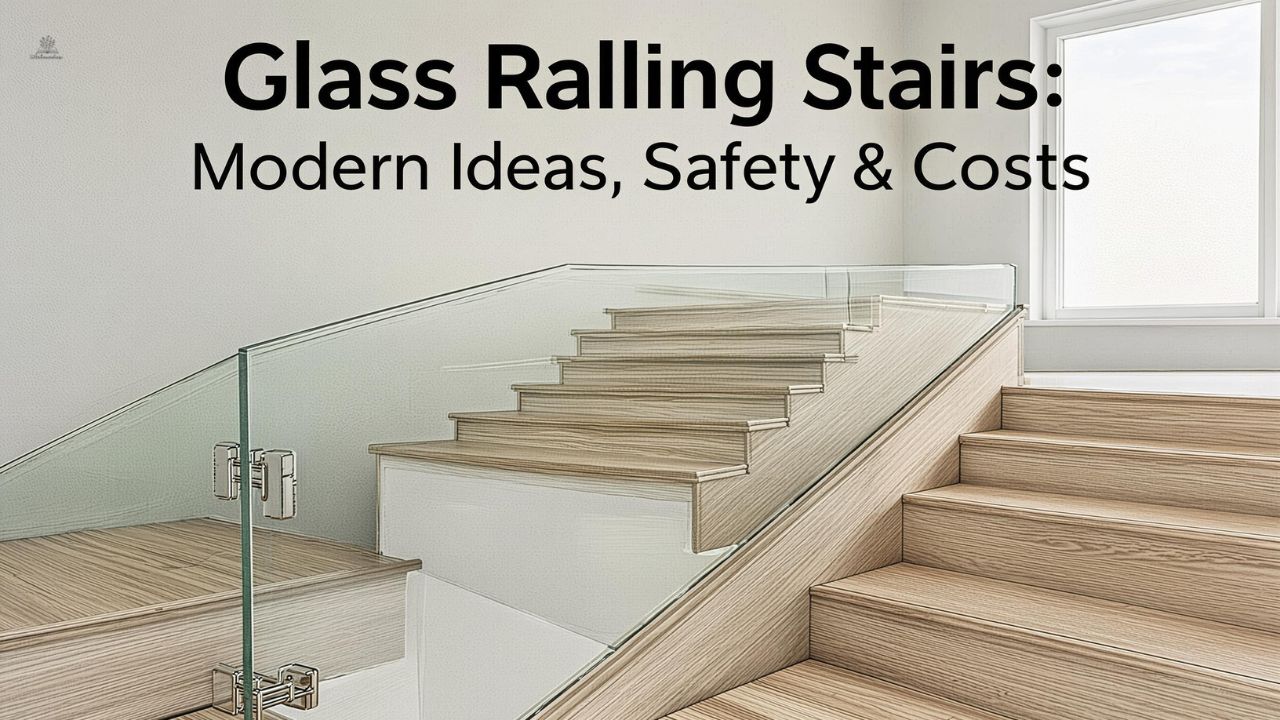
Some staircases simply take you upstairs. Others make the whole home feel brighter, cleaner, and more expensive. That is the charm of glass railing stairs.
They open up tight spaces, let light move freely, and give homes a sharp modern look without making the staircase feel heavy. Whether you are renovating an older stairway or planning a new build, glass railings can change the mood of the entire interior.
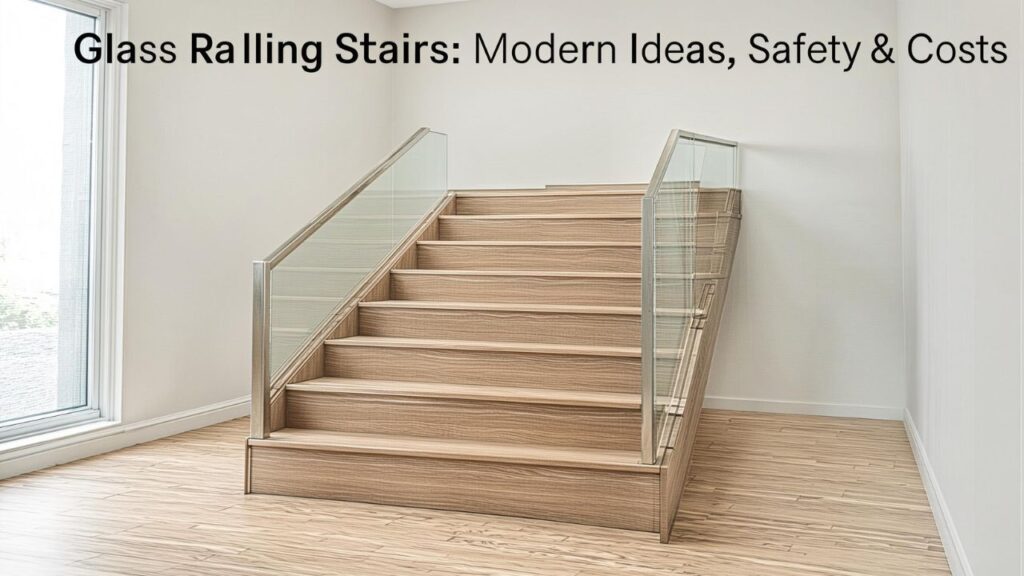
Of course, beauty is only one part of the decision. Stair railings must also be safe, code-aware, properly installed, and easy enough to maintain in real life. Building guidance commonly requires safety glass for guards and handrails, and many codes call for laminated glass in guard systems.
Table of Contents
- Why Glass Railing Stairs Are So Popular
- Types of Glass Railing Stairs
- Best Glass Options for Stair Railings
- Design Ideas for Modern Homes
- Safety and Building Code Basics
- Glass Railing Stairs Cost Factors
- Cleaning and Maintenance Tips
- Pros and Cons of Glass Stair Railings
- Common Mistakes to Avoid
- FAQs
- Conclusion
Why Glass Railing Stairs Are So Popular
Glass railings are popular because they solve one common design problem: heavy staircases can make homes feel closed off. Wood spindles, thick walls, and dark railings sometimes block light and make a hallway look smaller.
Glass does the opposite. It creates protection without visual weight. This is why glass railing stairs work especially well in narrow entryways, townhomes, lofts, duplexes, and modern open-plan homes.
They also pair beautifully with many materials:
- Wood treads
- Steel frames
- Floating stairs
- Marble floors
- Concrete steps
- Black metal handrails
- Brass or stainless-steel hardware
- Minimal white walls
In reality, glass railings are not only for luxury homes. They can also help ordinary staircases feel more open and updated.
Types of Glass Railing Stairs
Not every glass stair railing looks the same. The right style depends on your budget, home design, safety needs, and how much hardware you want visible.
Frameless Glass Railing Stairs
Frameless systems use glass panels with minimal visible support. The glass may be fixed into a base shoe, side-mounted brackets, or floor-mounted hardware.
This style looks clean, high-end, and architectural. It is one of the most popular options for modern interiors.
Best for:
- Luxury homes
- Minimalist interiors
- Floating stairs
- Open-plan layouts
- Homes with strong natural light
Semi-Frameless Glass Railings
Semi-frameless designs use glass panels with posts, clamps, or a top rail. They still feel open but usually show more structure than frameless systems.
This is a practical middle-ground choice because it can feel modern while offering visible support.
Framed Glass Railings
Framed glass railings use glass panels inside a full metal or wood frame. They are often strong, structured, and easier to understand visually.
They work well in homes where completely frameless glass may feel too sharp or too modern.
Glass Railing With Wood Handrail
A wood handrail softens the cool look of glass. It is a lovely option if you want a modern staircase but still want warmth.
Oak, walnut, ash, and maple are common choices.
Glass Railing With Black Metal
Black metal gives glass a bold outline. It works well with industrial, modern farmhouse, and contemporary interiors.
This combination feels stylish without looking too delicate.
Best Glass Options for Stair Railings
Glass used on stairs should never be treated like ordinary window glass. It must be safety glass suitable for railing use.
Tempered Glass
Tempered glass is heat-treated to become much stronger than regular glass. If it breaks, it usually crumbles into small pieces instead of sharp shards.
It is commonly used in many glass railing systems, but local code and system design matter.
Laminated Glass
Laminated glass has an interlayer between glass sheets. If the glass breaks, the interlayer helps hold pieces together.
For guards and railings, laminated glass is often preferred because it can remain more intact after breakage. Code guidance for glass in handrails and guards commonly specifies laminated glass made with fully tempered or heat-strengthened glass.
Frosted or Tinted Glass
Clear glass is the most common choice, but frosted or tinted glass can add privacy and softness.
Frosted glass works well when stairs are near bedrooms, bathrooms, or private upper-floor spaces.
Low-Iron Glass
Low-iron glass has less green tint than standard clear glass. It looks clearer and more premium.
It usually costs more, but the cleaner look can be worth it in high-end interiors.
Design Ideas for Modern Homes
The best glass railing stairs feel intentional. They do not just replace old railings; they improve the whole space around the staircase.
Floating Wood Stairs With Glass
Floating wood stairs and glass railings create a light, sculptural effect. The wood adds warmth, while the glass keeps the view open.
This design works beautifully in homes with white walls, large windows, and simple flooring.
Glass Railings With LED Stair Lighting
LED strip lights under stair treads or along the wall can make glass stairs feel dramatic at night.
They also improve visibility, which matters on any staircase.
Glass Railings in Small Entryways
Small homes benefit from glass because it reduces visual clutter. A traditional railing may make an entry feel tight, but glass keeps the space open.
Curved Glass Stair Railings
Curved glass is more custom and expensive, but it can look stunning on spiral or sweeping staircases.
This is best for premium projects where the staircase is a main architectural feature.
Glass With Stone or Marble Flooring
Glass pairs well with stone because both materials feel clean and elegant. Marble, porcelain, limestone, and polished concrete all work nicely.
![Image idea: Glass railing staircase with warm wood steps, LED lights, and a bright modern entryway.]
Safety and Building Code Basics
Glass stair railings must be designed for real pressure, impact, and daily use. This is not a good place to guess or cut corners.
Height Requirements
Many residential guardrails are commonly required to be at least 36 inches high, while handrails on stairs are commonly placed around 34 to 38 inches above the stair nosing, depending on local code. Always confirm requirements with your local authority before installation.
Load Requirements
Glass guards must be designed to handle specific loads. Glass Magazine notes that glass guards under the 2018/2021 IBC must meet both a 50 pounds-per-linear-foot load and a 200-pound concentrated load.
Openings and Gaps
Stair railing gaps are usually controlled so children cannot slip through openings. Many systems follow a “4-inch sphere” style rule, but exact rules depend on location and stair type.
Professional Installation Matters
Glass panels must be measured, supported, leveled, and anchored correctly. Poor installation can lead to rattling, stress cracks, weak points, and failed inspections.
Infographic: Glass Railing Stair Checklist
Glass Railing Stair Checklist
- Choose tempered or laminated safety glass
- Confirm local railing height rules
- Use strong posts, clamps, or base shoe support
- Add a secure handrail where required
- Keep stair lighting bright and even
- Clean glass with non-abrasive products
- Hire an experienced installer
Glass Railing Stairs Cost Factors
The cost of glass railing stairs can vary a lot. A simple straight run with standard panels may be manageable. A curved frameless system with custom glass can be much more expensive.
Main Cost Factors
| Cost Factor | Why It Matters |
|---|---|
| Glass type | Laminated and low-iron glass can cost more |
| Railing style | Frameless systems usually cost more than framed ones |
| Stair shape | Curved or angled stairs need custom work |
| Hardware finish | Stainless steel, black, brass, and custom finishes vary |
| Panel size | Larger panels need careful handling and support |
| Handrail choice | Wood, metal, or custom rails affect price |
| Installation labor | Precise measuring and anchoring take skill |
| Local code needs | Extra engineering or inspections can add cost |
Where to Spend More
Spend more on safety glass, proper hardware, and experienced installation. These are the parts that protect your home and family.
Where to Save
You can save by choosing standard clear glass, a semi-frameless system, simple straight panels, and common hardware finishes.
Cleaning and Maintenance Tips
Glass railings are beautiful, but fingerprints are real. If you have children, pets, or a busy household, expect regular cleaning.
Clean With a Soft Cloth
Use a microfiber cloth and a gentle glass cleaner. Avoid harsh scrub pads that can scratch hardware or nearby finishes.
Wipe Handrails Often
Handrails collect oils and dust faster than the glass itself. Wood handrails may need different care than metal ones.
Check Hardware
Every few months, look for loose clamps, rattling panels, corrosion, or movement. Any change should be checked quickly.
Avoid Heavy Impact
Glass railing systems are strong when properly designed, but they are not meant for heavy impact from furniture, tools, or hard objects.
Pros and Cons of Glass Stair Railings
Glass railings are beautiful, but they are not perfect for every home.
Advantages
- Makes spaces feel larger
- Lets natural light pass through
- Looks modern and premium
- Works with wood, metal, stone, and concrete
- Can improve visual flow between floors
- Helps show off stair design
Disadvantages
- Shows fingerprints and dust
- Costs more than many basic railings
- Requires careful installation
- May need custom glass panels
- Can feel too modern for some traditional homes
- Scratches or hardware issues can be noticeable
Common Mistakes to Avoid
Even expensive glass can look wrong if the design is not planned well.
Choosing Style Before Safety
A railing must protect people first. Never choose thin, non-rated, or decorative glass that is not suitable for guards.
Ignoring Local Codes
Codes can vary by city, building type, stair layout, and project scope. Do not rely only on online photos.
Using Cheap Hardware
Hardware carries the system. Weak brackets or poor anchors can ruin the safety and appearance of the railing.
Forgetting About Privacy
Clear glass opens the view. That is great in many spaces, but not always ideal near private rooms.
Poor Lighting
Glass railings look best with good lighting. Dark staircases can make glass edges harder to see.
FAQs
Are glass railing stairs safe?
Yes, glass railing stairs can be safe when they use proper safety glass, approved hardware, correct height, and professional installation. Safety depends on design quality and code compliance.
What type of glass is best for stair railings?
Laminated tempered glass is often a strong choice because it combines strength with better breakage behavior. The exact requirement depends on local code and railing design.
Do glass stair railings need a handrail?
Many stair systems need a graspable handrail, even when glass acts as the guard. Requirements vary, so always confirm with local building rules.
Are glass railings hard to clean?
They are not hard to clean, but they do show fingerprints, dust, and smudges. A microfiber cloth and gentle glass cleaner usually work well.
Are glass railing stairs expensive?
They usually cost more than basic wood or metal railings. Frameless designs, custom glass, curved stairs, and premium hardware increase the price.
Can glass railings be used with wooden stairs?
Yes. Glass and wood are one of the most attractive combinations. The wood adds warmth while the glass keeps the staircase open and bright.
Do glass railings scratch easily?
Quality glass is durable, but it can still scratch from abrasive cleaners, rough tools, or hard contact. Use soft cleaning materials.
What is the difference between frameless and semi-frameless glass railings?
Frameless systems hide most supports for a cleaner look. Semi-frameless systems use visible posts or clamps and may be more practical for some homes.
Do glass railings add value to a home?
They can improve perceived value by making a staircase look modern, bright, and high-end. The actual value depends on the home, market, installation quality, and buyer taste.
Conclusion
Glass railing stairs can turn an ordinary staircase into one of the most attractive parts of a home.
They bring light, openness, and a clean modern style that works beautifully with wood, steel, stone, and concrete. However, they must be planned carefully. Glass type, railing height, hardware, handrails, cleaning needs, and local code all matter.
The best glass railing stairs are not just beautiful in photos. They feel safe, solid, easy to use, and natural inside the home. When design and installation are done well, they can make your staircase feel brighter, lighter, and genuinely memorable.