
A beautiful living room should make you exhale the moment you walk through the door. A well-designed farmhouse living room does exactly that by combining comfort, character, and practical details that feel collected rather than staged.
The best farmhouse living room ideas are not about filling every corner with signs, distressed finishes, or matching accessories. They are about choosing honest materials, comfortable furniture, warm lighting, and meaningful pieces that make daily life easier. Whether you love a clean modern farmhouse living room or a more relaxed country look, the goal is to create a room where people genuinely want to sit, talk, read, and stay awhile.
A successful room also reflects the people who live there. That is why the most useful farmhouse decor ideas begin with your routines, your storage needs, and the mood you want at the end of the day. A comfy warm farmhouse living room may include a deep sofa and washable fabrics, while a polished space may rely on cleaner lines, tailored curtains, and fewer decorative objects.
You can also blend styles without losing the farmhouse feeling. A balanced farmhouse decor living room can include traditional wood, contemporary art, vintage pottery, and streamlined lighting in the same space. The mix works when the colors, scale, and materials feel connected.
What Defines a Farmhouse Living Room?
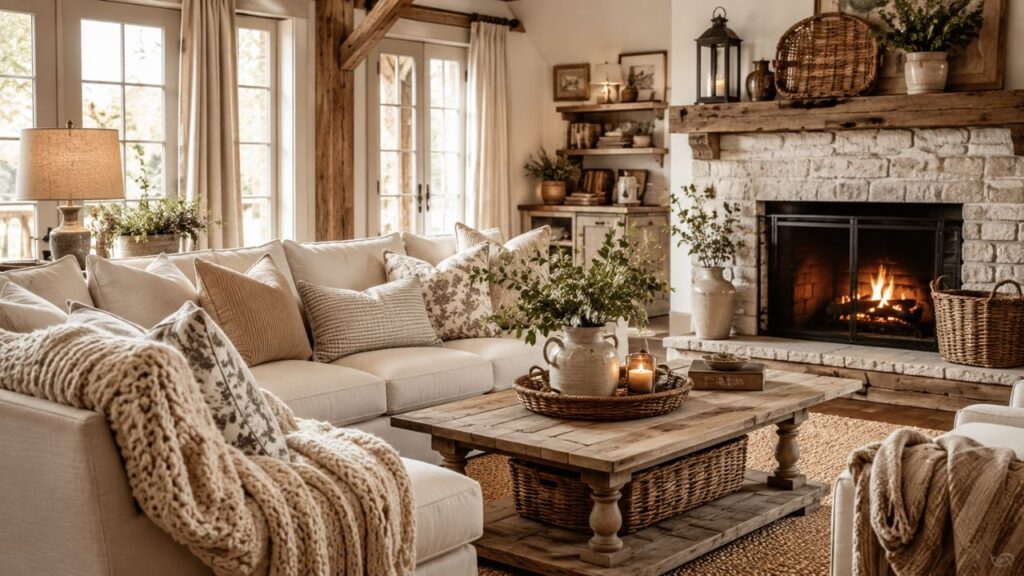
At its heart, a farmhouse living room is comfortable, useful, and approachable. It usually includes natural or natural-looking materials, generous seating, simple shapes, and objects that appear to have a purpose or a story. The room may feel traditional, contemporary, rustic, coastal, or even slightly industrial, but it should never feel too precious for everyday use.
A rustic warm farmhouse living room often leans into aged timber, stone, iron, woven baskets, vintage textiles, and deeper earthy colors. A cleaner interpretation uses the same sense of warmth but edits the details. This is where modern farmhouse style becomes useful: it combines country character with straightforward lines, calm colors, and more breathing room.
The most practical farmhouse living room ideas start with function. Think about how many people use the room, whether children or pets need durable surfaces, where drinks will be placed, and how traffic moves from one doorway to another. A beautiful room becomes frustrating when the coffee table blocks movement or the only lamp is too far from the reading chair.
A contemporary farmhouse room still needs softness. Clean lines should be balanced by relaxed upholstery, textured rugs, curtains, wood grain, and warm pools of light. Without those elements, the room can look flat or overly formal.
Begin With a Warm, Flexible Color Palette
The safest foundation for a farmhouse living room is a flexible neutral palette, but neutral does not have to mean plain white. Warm ivory, oatmeal, mushroom, clay, putty, muted taupe, and soft greige create a calmer background than stark, cool whites. These shades also work well with natural wood and aged metals.
To create a comfy warm farmhouse living room, build color in layers. Use one light wall color, one or two medium tones in rugs and upholstery, and a few darker accents to give the room definition. Dark brown, charcoal, black, forest green, muted navy, and deep rust can ground a pale room without making it feel heavy.
Color should also connect the old and new pieces in the room. In a modern farmhouse living room, black window frames or a dark metal light can repeat the tone of a coffee-table base, picture frame, or fireplace screen. This repetition makes separate items feel intentional.
For a rustic warm farmhouse living room, consider richer tones such as tobacco leather, weathered brown, olive, brick, and warm cream. These colors support aged finishes and create a cocooning atmosphere, especially in rooms with limited natural light.
Good modern farmhouse decor rarely depends on a single trendy color. It works best when the main palette is quiet and the seasonal color comes from throws, pillows, flowers, branches, books, and artwork. That approach lets you refresh the room without replacing expensive furniture.
Choose Comfortable Furniture Before Decorative Pieces
The sofa is usually the largest investment and the visual anchor of a farmhouse living room. Choose it for comfort, scale, and durability before thinking about decorative trends. Deep seats suit lounging, while shallower seats are often easier for conversation and for people who prefer more upright support.
A comfy warm farmhouse living room benefits from upholstery that looks relaxed but not sloppy. Linen blends, cotton canvas, performance fabric, soft leather, and textured weaves all fit the style. Removable or washable covers are especially practical in homes with children, pets, or frequent guests.
Furniture does not need to come from one matching collection. In fact, modern farmhouse style often looks better with a thoughtful mix: a simple sofa, a vintage wood chest used as a coffee table, a clean-lined armchair, and a small side table with visible grain. The common thread may be color, material, or proportion rather than an identical finish.
Before buying anything, tape the furniture dimensions onto the floor. Leave clear walking paths and make sure every main seat can reach a table or surface. In a narrow farmhouse decor living room, two smaller chairs may work better than one oversized recliner, and nesting tables may be more useful than a bulky coffee table.
Build Warmth Through Texture and Natural Materials
Texture is what stops a neutral room from feeling empty. In a farmhouse living room, smooth painted walls can sit beside a nubby rug, soft linen, worn leather, woven cane, rough pottery, and wood with a visible grain. The contrast is more important than the number of accessories.
Many effective farmhouse decor ideas use ordinary materials in a considered way. A large basket can store blankets, a stoneware bowl can hold remotes, and a vintage stool can work as a side table. Pieces that serve a function tend to feel more authentic than objects purchased only to fill shelves.
A rustic warm farmhouse living room can handle stronger texture, including reclaimed beams, limewashed brick, hand-hewn wood, thick wool, jute, aged brass, and iron. Use rough surfaces selectively so the space still feels comfortable. Too many distressed finishes can make the room feel themed rather than naturally evolved.
In modern farmhouse decor, pair rough and refined materials. A reclaimed table looks fresher beside a tailored sofa. A stone fireplace feels lighter with simple art. Woven shades soften black metal frames. This contrast creates depth without visual clutter.
Plan Lighting in Layers
A single ceiling fixture cannot provide all the light a living room needs. A comfortable farmhouse living room should combine ambient lighting for the whole room, task lighting for reading or work, and accent lighting that highlights art, shelves, or architectural features.
For a comfy warm farmhouse living room, choose warm-toned bulbs and place lamps at different heights. A floor lamp beside a chair, table lamps near the sofa, and a small picture light above artwork can make the room feel welcoming after sunset. Dimmers are useful because they let the same space shift from active family time to a quiet evening.
In a farmhouse decor living room, the fixtures can add character without becoming overly decorative. Consider simple lantern shapes, ceramic lamp bases, aged brass, dark bronze, linen shades, or understated wood details. Avoid filling the room with too many matching fixtures; repetition should be subtle.
Natural light matters too. Use curtains that frame the window rather than covering it completely. Linen-look panels, woven shades, or simple cotton curtains soften the room while preserving brightness and privacy.
Create a Strong Focal Point
Every room benefits from one clear visual anchor. In many homes, the fireplace naturally becomes the focal point, but a large window, built-in shelves, a meaningful painting, or a well-proportioned media wall can serve the same purpose.
When collecting farmhouse living room ideas, notice how successful rooms keep the focal wall edited. A mantel does not need ten small objects. One piece of art, a mirror, a pair of candlesticks, or a few varied ceramics usually creates more impact than a crowded display.
Wall treatments can add character, but they should suit the architecture. Shiplap, vertical paneling, beadboard, limewash, plaster-style finishes, or simple picture-frame molding can all support farmhouse decor ideas. Use them where they make sense rather than applying the same treatment to every wall.
If the television shares the focal wall, design around it honestly. A low cabinet, balanced sconces, shelving, or a darker paint color can help the screen feel integrated. Trying to hide it behind excessive decorative objects often creates more clutter.
Give Modern Farmhouse a Fresher Direction
A current modern farmhouse living room feels warmer and more personal than the highly coordinated versions that once relied on bright white walls, identical wood tones, and repeated signs. Keep the practical spirit, but allow more color, art, craftsmanship, and individuality.
The strongest modern farmhouse decor combines clean silhouettes with tactile materials. Try a streamlined sofa with a vintage rug, a sculptural lamp beside an old wood cabinet, or contemporary art above a stone fireplace. The room remains relaxed because the materials feel grounded.
Good modern farmhouse style also leaves negative space. Not every wall needs shelves, and not every tabletop needs a tray. A few larger, better-chosen objects usually look calmer than many small pieces.
You can make the style feel personal through local art, family photographs, handmade pottery, old books, inherited furniture, or a piece found while traveling. These details keep the room from looking copied from a showroom.
Create a More Rustic, Collected Look
A rustic warm farmhouse living room should feel layered over time. Start with substantial materials such as wood, stone, leather, wool, and iron, then add softer elements so the room remains inviting. The goal is warmth and history, not deliberate damage or artificial distressing.
Mixing wood tones is not only acceptable; it often makes the space more believable. Light oak flooring, a darker chest, and a medium-toned side table can coexist when at least one tone repeats elsewhere. Keep the undertones reasonably compatible and use textiles to bridge the differences.
Vintage items are most effective when they still serve a purpose. An old trunk can store games, a ladder can hold blankets, a crock can contain branches, and an antique cabinet can hide electronics. Functional reuse feels natural and helps prevent the room from becoming a display of unrelated antiques.
Use Accessories With Restraint
Accessories should complete the room rather than compete with it. Start with textiles because they provide softness and can be changed easily. Combine pillows in different sizes, but limit the color palette. Add one or two throws with distinct textures instead of covering every seat.
Artwork is one of the easiest ways to move beyond generic farmhouse decor ideas. Landscapes, botanical studies, simple abstracts, architectural drawings, family photographs, and textile art can all work. Choose pieces you actually enjoy looking at, and vary the frame materials rather than buying a matching set.
Greenery adds life, but it does not need to appear on every surface. A branch in a tall ceramic vessel, a real plant near a bright window, or a small herb arrangement on a table is often enough. Seasonal clippings can feel more natural than permanent arrangements placed throughout the room.
Books, pottery, baskets, candles, and found objects look best when grouped by scale and purpose. Leave some empty space around each arrangement. That breathing room makes ordinary objects feel more considered.
Budget-Friendly Ways to Refresh the Room
You do not need a full renovation to improve a farmhouse living room. Start with the changes that affect the largest visual areas: rearrange the furniture, remove unnecessary items, repaint the walls, update the rug, or hang curtains higher and wider. These moves can change the room more than a collection of new accessories.
Some of the most affordable farmhouse living room ideas come from secondhand sources. Local flea markets, charity shops, online marketplaces, estate sales, and architectural salvage stores may offer solid wood tables, vintage frames, baskets, pottery, lamps, and cabinets at lower prices than new reproductions.
Use simple farmhouse decor ideas to refresh what you already own. Replace shiny hardware, recover a seat cushion, add a linen-look lampshade, sand and seal a wood table, or frame an old print. Small updates work best when they support a clear color and material plan.
Spend more on the pieces that receive daily use, such as the sofa, rug pad, reading chair, and lighting. Save on decorative objects that can be sourced gradually. A room collected over time usually feels more personal than one purchased all at once.
Farmhouse Style in Small or Open-Plan Spaces
A small farmhouse living room needs the same warmth as a large one, but the furniture must work harder. Choose pieces with visible legs, compact arms, or built-in storage. A round coffee table can improve circulation, while wall-mounted lighting frees space on side tables.
In a compact farmhouse decor living room, reduce the number of materials and colors. One dominant wood tone, one metal finish, and a controlled palette will make the room feel calmer. Use texture through fabric and baskets rather than adding many decorative objects.
For an open-plan home, repeat a few elements across the living, dining, and kitchen areas. The same wood tone, black accent, woven texture, or wall color can create continuity. Avoid making every area identical; each zone should still have its own function and focal point.
Use rugs and furniture placement to define the seating area. The front legs of the sofa and chairs should usually sit on the rug, which helps the pieces read as one group rather than separate objects floating in a large room.
Common Farmhouse Decorating Mistakes
The first mistake is treating farmhouse as a theme rather than a way of living. Too many word signs, miniature windmills, faux barn doors, and deliberately distressed objects can overwhelm the room. One or two references are enough when the furniture and materials already communicate the style.
Another mistake is using only white, beige, and pale wood. A room needs contrast to feel finished. Introduce dark frames, deeper textiles, aged metal, rich leather, or earthy artwork so the light colors have something to play against.
Poor scale is equally common. Tiny art above a wide sofa, a rug that ends before the furniture, or a small coffee table in a large seating group can make the room feel disconnected. Measure carefully and choose fewer pieces at the right size.
A thoughtfully planned farmhouse living room should feel connected without looking overly matched. Finally, do not confuse modern farmhouse style with perfect coordination. Matching every finish removes the collected quality that makes farmhouse interiors appealing. Repetition is helpful, but variation gives the room character.
Frequently Asked Questions
Where can I find farmhouse living room furniture near me?
Search local furniture districts, independent woodworkers, vintage stores, estate-sale listings, architectural salvage shops, and online marketplaces filtered by your city. Visit in person when possible so you can check comfort, construction, odor, damage, and scale before buying. For a modern farmhouse living room, combine one or two vintage pieces with dependable new upholstery rather than trying to source everything from the same shop.
How much does it cost to decorate a farmhouse-style living room?
A light refresh may cost a few hundred dollars if you reuse furniture and focus on paint, textiles, lighting, and secondhand accessories. A full update with a quality sofa, large rug, tables, window treatments, and professional work can cost several thousand dollars. Prioritize the items used every day and build the room gradually.
How long does a farmhouse living room makeover take?
A styling refresh can often be completed over a weekend once the products are available. A larger makeover involving painting, custom curtains, furniture delivery, electrical work, or fireplace changes may take several weeks. Ask local suppliers for written lead times before removing your existing furniture.
How do I find a trustworthy farmhouse interior designer near me?
Review completed projects rather than relying only on social media mood boards. Ask whether the designer has experience with rooms similar to your size, budget, and architecture. A reliable professional should explain fees, purchasing terms, timelines, revisions, and contractor responsibilities clearly before work begins.
Can a local carpenter build farmhouse shelves or a media unit?
Yes. A skilled carpenter can create built-ins, floating shelves, window seats, mantels, and media cabinets sized to your wall. Request drawings, finish samples, material details, and a written quote. For authentic modern farmhouse decor, choose simple proportions and quality woodwork rather than adding unnecessary decorative trim.
What are the best farmhouse living room ideas for renters?
Use removable changes: large rugs, plug-in sconces, slipcovers, freestanding shelves, framed art, baskets, curtains, and secondhand wood furniture. These farmhouse living room ideas add warmth without permanent construction. Always get written approval before painting, mounting heavy pieces, or changing fixtures.
Can an upholsterer near me make my sofa feel more farmhouse-inspired?
An upholsterer may be able to recover a sound sofa, replace worn cushions, add a tailored skirt, or update an accent chair. Ask to see fabric samples in your room’s daylight and request performance information if you have children or pets. Reupholstery is most worthwhile when the frame is sturdy and the piece is comfortable.
What should I ask a painter before choosing warm neutral walls?
Ask for sample patches on several walls and view them morning, afternoon, and evening. Confirm the paint finish, surface preparation, number of coats, repair work, cleanup, and whether materials are included. Warm neutrals can shift noticeably beside flooring, upholstery, and artificial light.
Which local services can help with a farmhouse living room update?
Depending on the project, you may need a painter, electrician, carpenter, curtain maker, upholsterer, rug cleaner, fireplace specialist, or interior designer. A good farmhouse decor living room project often succeeds through small, well-coordinated improvements rather than one dramatic renovation. Collect written estimates and confirm who is responsible for measurements and installation.
How can I create farmhouse warmth without making the room look old-fashioned?
Use comfortable furniture, natural texture, warm wood, restrained vintage pieces, and contemporary lighting or art. This balance preserves modern farmhouse style while avoiding a themed appearance. A simple palette and a few meaningful objects will usually feel more current than many decorative signs or distressed accessories.
Conclusion
A welcoming farmhouse living room is built through comfort, usefulness, and thoughtful layering. Start with a practical layout, choose a warm palette, invest in seating that supports real life, and bring in wood, woven fibers, pottery, soft textiles, and lighting at different heights.
Whether you prefer modern farmhouse decor, a clean modern farmhouse living room, or a rustic warm farmhouse living room, resist the urge to copy every recognizable farmhouse symbol. The room will feel richer when it includes pieces with personal meaning, visible craftsmanship, and enough empty space to breathe.
The best comfy warm farmhouse living room is not the one with the most accessories. It is the one that welcomes people in, handles everyday life gracefully, and feels more like home each year.