Introduction
Stairs are one of those places in the home that quietly take a beating every single day. Choosing the right carpet for stairs can make them safer, softer, quieter, and much better looking.
Think about it. People run up and down with shoes, pets scratch at the edges, children sit on the steps, and dust settles right where the foot lands. A pretty carpet that cannot handle traffic may look tired very quickly.
The right choice is not only about color. It is about fiber, pile height, durability, padding, grip, installation style, cleaning, and how the carpet works with the rest of your home.
Falls are also a real concern. The CDC says more than one in four older adults fall each year, and falling once doubles the chance of falling again. That makes stair surface, lighting, handrails, and secure installation more important than many homeowners realize.
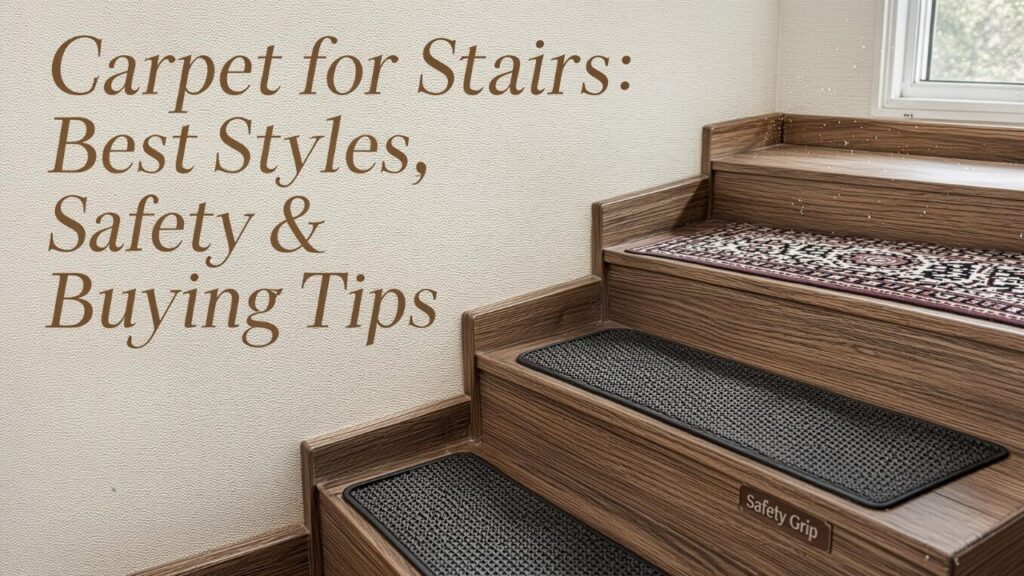
Table of Contents
- Why Carpet for Stairs Matters
- Best Carpet for Stairs by Material
- Carpet Pile Types for Stairs
- Stair Runner vs Full Stair Carpet
- Best Colors and Patterns for Stair Carpet
- Carpet Padding for Stairs
- Safety Tips Before Installing Carpet for Stairs
- Carpet for Stairs Cost Factors
- Cleaning and Maintenance Tips
- Common Mistakes to Avoid
- FAQs
- Conclusion
Why Carpet for Stairs Matters
Stairs are different from bedrooms, living rooms, and flat hallways. Every step gets direct pressure on the same front edge, called the stair nosing. That edge wears faster than almost any other part of a carpeted area.
This is why carpet for stairs needs to be stronger than a soft bedroom carpet. It must handle repeated foot traffic, resist crushing, stay tight against the stair shape, and avoid becoming loose or slippery.
A good stair carpet can help with:
- Better traction underfoot
- Less noise between floors
- Softer landings
- Warmer steps in winter
- Improved hallway style
- Protection for wooden stair treads
- A more finished look from entry to landing
However, the wrong carpet can do the opposite. A loose, thick, or worn carpet can become a trip risk. The U.S. Consumer Product Safety Commission advises that stair treads should be in good condition and have slip-resistant surfaces, including dense, low-pile carpeting or securely attached slip-resistant strips.
Best Carpet for Stairs by Material
The carpet fiber affects durability, stain resistance, softness, price, and long-term appearance. For stairs, durability should come before luxury softness.
Nylon Carpet
Nylon is one of the strongest choices for stairs. It handles heavy traffic well, resists crushing, and can bounce back better than many softer fibers.
It is a good fit for:
- Busy family homes
- Main staircases
- Hallways connected to stairs
- Homes with kids or pets
- Neutral stair runners
Nylon usually costs more than polyester, but it often lasts longer in high-use areas.
Wool Carpet
Wool feels rich, warm, and natural. It has a beautiful texture and can look elegant on stairs, especially in traditional homes.
It is naturally resilient, but it usually costs more and may need more careful cleaning. If you want a premium stair runner, wool or a wool blend can be a lovely choice.
Polyester Carpet
Polyester is soft and often more affordable. It can resist stains well, but it may flatten faster in heavy-traffic stair areas.
It may work better for low-traffic stairs, guest areas, or homes where budget is the main concern.
Triexta Carpet
Triexta is known for softness and stain resistance. It can be a smart middle-ground option for families, though quality varies by product.
For stairs, choose a dense, low-pile triexta carpet rather than a fluffy style.
Olefin Carpet
Olefin, also called polypropylene, is often used in loop carpets and indoor-outdoor styles. It resists moisture and staining but can crush in heavy traffic.
It is usually not the top choice for a main staircase unless the product is specifically designed for stairs.
Carpet Pile Types for Stairs
Pile means the surface fibers of the carpet. On stairs, pile style matters a lot because it affects grip, wear, cleaning, and appearance.
Low-Pile Carpet
Low-pile carpet has shorter fibers. It is usually easier to clean and better for stairs because it sits closer to the surface.
This is one of the safest and most practical choices for carpet for stairs. It gives comfort without creating a bulky or unstable feel.
Cut Pile Carpet
Cut pile has yarn ends that are cut rather than looped. It can feel soft and smooth.
For stairs, choose a dense cut pile rather than a tall plush carpet. Very soft plush styles may show footprints and wear on stair edges.
Loop Pile Carpet
Loop pile carpet has uncut loops. It can be durable and textured, especially in tight, low loops.
However, loop carpet may snag if you have pets with claws. A very large loop can also feel less smooth underfoot.
Berber Carpet
Berber is a loop-style carpet often used for durability. It can work on stairs if it is dense, low, and properly installed.
That said, some Berber carpets can snag or show pulls. Always check whether the specific product is recommended for stairs.
Patterned Carpet
Patterned carpet can hide dirt, footprints, and minor wear. This makes it practical for stairs.
Small-scale patterns usually work better than large designs because stairs break the pattern into separate sections.
Stair Runner vs Full Stair Carpet
One of the biggest decisions is whether to cover the full stair width or use a runner.
Stair Runner
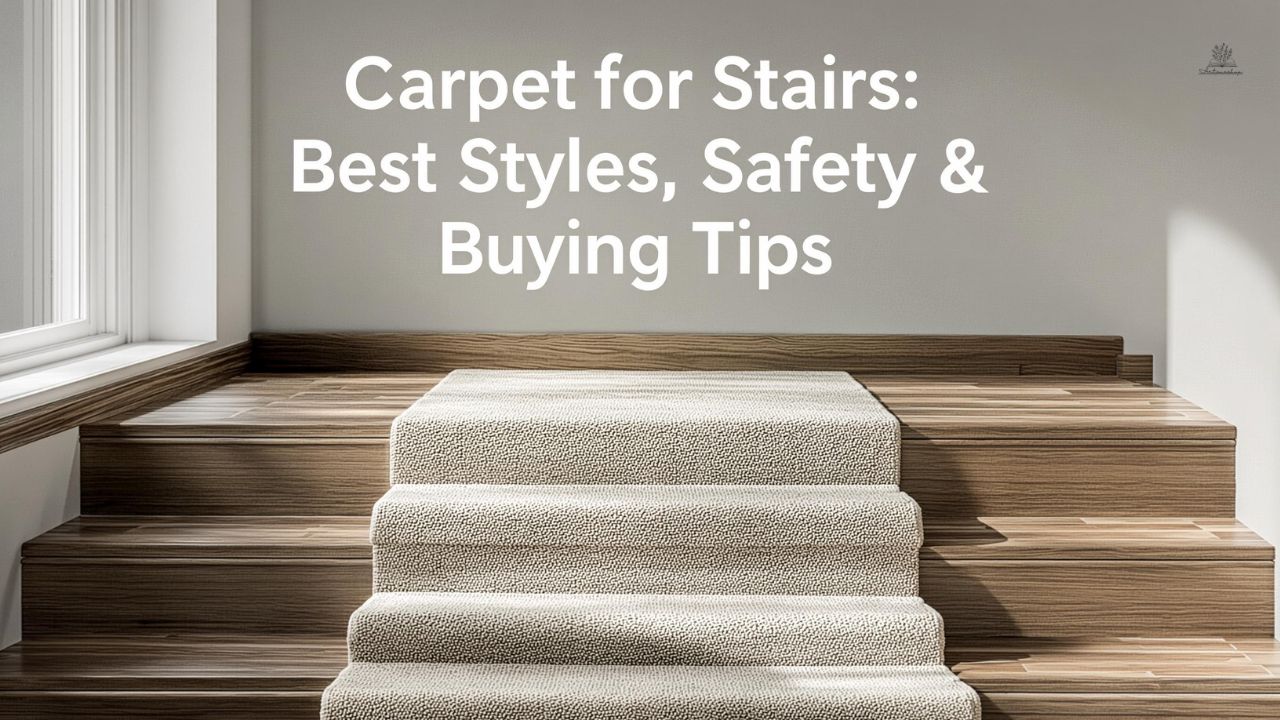
A stair runner covers the center of the stairs while leaving wood, tile, or painted edges visible.
It gives a polished designer look and works well when the stairs themselves are attractive.
Benefits of a stair runner include:
- Shows off wooden stair edges
- Adds grip in the walking zone
- Feels stylish and custom
- Can make narrow stairs look longer
- Easier to pair with hallway rugs
A runner is often the best choice when you want carpet for stairs without hiding the entire staircase.
Full Stair Carpet
Full stair carpeting covers the entire step from side to side. It feels warmer and softer and can hide old or unattractive stairs.
It works well for:
- Family homes
- Older stairs with worn treads
- Basement stairs
- Stairs that need more sound control
- Homes where comfort matters more than exposed wood
Which One Should You Choose?
| Feature | Stair Runner | Full Stair Carpet |
|---|---|---|
| Best look | Stylish and decorative | Soft and complete |
| Wood visibility | Shows stair edges | Covers all wood |
| Comfort | Medium | High |
| Cleaning | Edges may collect dust | Easier full coverage |
| Cost | Can be higher with custom edges | Depends on material |
| Best for | Design-focused homes | Family and comfort-focused homes |
Best Colors and Patterns for Stair Carpet
Color changes the whole personality of the staircase. It can make stairs feel calm, bold, traditional, modern, or cozy.
Neutral Carpet Colors
Neutral shades are safe and timeless. Beige, taupe, gray, greige, oatmeal, and warm cream work with many interiors.
They are good choices when:
- You plan to sell the home
- Your walls or flooring may change later
- You want a calm hallway
- You prefer a classic look
Dark Carpet Colors
Dark carpet can hide marks, but it may also show lint, pet hair, and dust. Charcoal, navy, espresso, and deep brown can look dramatic on stairs.
Use dark colors with good lighting so the stair edges remain visible.
Patterned Stair Carpet
Patterned carpet is excellent for hiding everyday dirt. Stripes, herringbone, diamond, plaid, and small geometric prints all work well.
For narrow stairs, a vertical stripe can make the staircase feel longer.
Avoid Very Light Carpet in Busy Homes
White or pale cream stairs can look beautiful in photos, but they are hard to maintain in real homes with shoes, pets, and children.
A mid-tone carpet is usually more forgiving.
Carpet Padding for Stairs
Padding is the cushion under the carpet. It affects comfort, support, sound, and carpet life.
On stairs, thicker is not always better. Too much cushion can make the stair edge feel rounded and less stable.
The Carpet and Rug Institute notes that a common residential carpet cushion guideline is no more than 7/16 inch thick and no less than 1/4 inch with 6 pounds per cubic foot density. For Berber or low-profile carpet, it suggests no more than 3/8 inch thick with 8 pounds density. Always check the carpet manufacturer’s requirements first.
Why Stair Padding Matters
Good padding can:
- Reduce impact noise
- Make stairs more comfortable
- Support the carpet backing
- Help carpet wear more evenly
- Reduce stress on the fibers
Best Padding Choice for Stairs
For most staircases, a firm and dense pad is better than a soft, thick pad.
Ask for stair-rated padding and confirm it is suitable for the carpet style you choose.
Safety Tips Before Installing Carpet for Stairs
Beauty matters, but safety comes first. A stair carpet should feel secure, tight, and easy to walk on.
Choose Dense, Low-Pile Carpet
Dense, low-pile carpeting is usually better for stair safety than thick, loose, or shaggy carpet. It gives better foot contact and reduces the chance of catching a toe.
Avoid Loose Rugs on Stairs
Loose rugs do not belong on stairs. If using a runner, it should be professionally secured with proper tack strips, staples, adhesive methods, or stair rods used decoratively rather than as the only hold.
Keep Stair Edges Visible
If the carpet pattern hides the stair edge too much, it may affect depth perception. This can matter for older adults, children, and guests unfamiliar with the home.
Maintain Good Lighting
Even the best carpet cannot fix a dark staircase. Use wall lights, overhead lighting, or step lights so each tread is visible.
Repair Worn Carpet Quickly
Loose, torn, stretched, or wrinkled carpet should be repaired or replaced. Research on rug and carpet-related fall injuries notes that loose rugs and damaged carpets with curled edges are recognized home hazards that may contribute to falls.
Infographic: How to Choose Carpet for Stairs
How to Choose Carpet for Stairs
- Pick a durable fiber: nylon, wool, or dense triexta
- Choose low-pile or tight-loop texture
- Use firm stair-rated padding
- Select a forgiving mid-tone or pattern
- Make sure installation is tight and secure
- Keep stairs clean, lit, and clutter-free
Carpet for Stairs Cost Factors
The price of stair carpeting can vary widely. A simple basement staircase may be affordable, while a custom wool runner with bound edges can cost much more.
Main Cost Factors
| Cost Factor | Why It Matters |
|---|---|
| Carpet material | Wool costs more than many synthetic fibers |
| Stair count | More steps mean more labor and material |
| Runner vs full carpet | Runners may need binding and custom fitting |
| Pattern matching | Patterns take more planning and waste |
| Padding quality | Better padding adds cost but improves support |
| Stair shape | Curved or pie-shaped stairs cost more |
| Removal work | Old carpet removal adds labor |
| Installation method | Custom work costs more than basic fitting |
Where to Spend More
Spend more on fiber durability, padding quality, and professional installation. These affect how the carpet performs every day.
Where to Save
You can save by choosing a simple pattern, standard width, synthetic fiber, or full carpet instead of a custom runner with expensive binding.
Best Carpet for Stairs in Different Homes
Not every home needs the same stair carpet. The right choice depends on lifestyle.
For Families With Kids
Choose a dense nylon or triexta carpet in a mid-tone pattern. Avoid very light colors and tall plush textures.
Good options include:
- Speckled beige
- Warm gray
- Small geometric pattern
- Low loop texture
- Soft stripe
For Homes With Pets
Look for stain resistance, strong backing, and a texture that does not snag easily. Be careful with loop carpets if pets scratch or run on stairs.
For Older Adults
Prioritize traction, secure installation, visible edges, handrails, and good lighting. Avoid thick padding or high pile.
For Luxury Interiors
Consider wool, wool blends, tailored runners, herringbone patterns, or bordered designs.
For Rental Properties
Choose durable, affordable, stain-resistant carpet that is easy to replace. Neutral colors are usually best.
Stair Carpet Installation Styles
Installation style changes how the finished staircase looks.
Waterfall Installation
The carpet flows directly from one step down to the next. It creates a smooth, relaxed look.
It is common, simple, and often more affordable.
Hollywood Installation
The carpet is wrapped tightly around the edge of each tread and fitted along the riser. It gives a tailored, high-end look.
This style usually takes more labor but looks very polished.
Runner With Bound Edges
A runner should have finished edges to prevent fraying. Binding, serging, or border tape can make the runner look custom.
Stair Rods
Stair rods can add a classic decorative touch, but they should not be relied on as the only way to secure the carpet.
Cleaning and Maintenance Tips
A staircase collects dust, grit, and hair quickly because every step creates pressure.
Vacuum Often
Vacuum stairs at least once a week in busy homes. Use a brush attachment or stair tool to reach corners and edges.
Clean Spills Quickly
Blot spills instead of rubbing. Rubbing can push stains deeper and damage fibers.
Rotate Attention to High-Wear Areas
The center of each step wears fastest. Watch for flattening, discoloration, or loose spots.
Deep Clean Carefully
Professional cleaning can refresh stair carpet, but avoid soaking the carpet. Too much moisture can affect backing, padding, and adhesion.
Trim Snags, Do Not Pull Them
If a fiber loop snags, trim it carefully. Pulling can make the damage worse.
Common Mistakes to Avoid
Choosing carpet for stairs is easy to get wrong because many beautiful carpets are not built for stair traffic.
Choosing Carpet That Is Too Thick
Thick carpet may feel luxurious, but it can make stairs less defined. It can also wear poorly around the nosing.
Ignoring the Padding
Cheap or soft padding can reduce carpet life and make stairs feel unstable.
Picking a Delicate Color
Very pale carpet can become stressful to maintain. Stairs are not the best place for a fragile, showroom-only color.
Skipping Professional Installation
Stair carpet must be tight and secure. Poor installation can create wrinkles, movement, or uneven edges.
Forgetting the Landing
The landing should coordinate with the stairs. A sudden change in color or texture can look unfinished.
FAQs
What is the best carpet for stairs?
The best carpet for stairs is usually dense, low-pile, durable, and professionally installed. Nylon, wool, and quality triexta are strong options for many homes.
Is carpet on stairs a good idea?
Yes, carpet can add grip, comfort, warmth, and noise reduction. It must be properly installed and kept in good condition to stay safe.
What carpet pile is best for stairs?
Low-pile carpet is usually best because it is easier to clean, less bulky, and more stable underfoot than thick plush carpet.
Is a stair runner better than full carpet?
A stair runner is better if you want a stylish look and visible wood edges. Full carpet is better if you want maximum softness, coverage, and sound control.
What color carpet is best for stairs?
Mid-tone colors are usually best. Beige, taupe, gray, greige, brown, and patterned designs hide dirt better than very light or very dark colors.
Do stairs need carpet padding?
Yes, most carpeted stairs need suitable padding. The pad should be firm and dense, not overly thick.
Can I install carpet on stairs myself?
It is possible, but stair installation is harder than flat-room carpet. For safety and a clean finish, professional installation is usually the better choice.
How often should stair carpet be replaced?
It depends on fiber, traffic, pets, cleaning, and installation quality. Replace it when it becomes loose, badly worn, stained, torn, or unsafe.
Are carpeted stairs safer than wood stairs?
Carpet can improve traction and soften falls, but only when it is secure and in good condition. Loose or damaged carpet can become dangerous.
Conclusion
The best carpet for stairs is the one that fits your home, your lifestyle, and the way your staircase is used every day.
Do not choose by color alone. Look at fiber strength, pile height, padding, installation style, safety, cleaning needs, and how the carpet connects with nearby rooms.
A well-chosen carpet for stairs can make your home feel quieter, warmer, safer, and more finished. Whether you prefer a tailored runner or full soft coverage, the smartest choice is one that looks beautiful and stands up to real life.